1 pound soft Kasseri (beat me where to get it where YOU live; I go to Whole Foods)
about half a stick of butter
lemon
pita
Brandy (about a jigger full)
Cut cheese into slices about 1/4 inch thick. Place on fireproof broiler pan and brush with melted butter. Broil for 4 to 6 minutes until chees is bubbly and light broun.
Immediately take it to the table. Pour Brandy over the cheese and ignite. Sprinkle with lemon juice and serve with warm toasted buttered pita (grilled is good.)
Opa!
Friday, October 13, 2006


Comfort Spanakopita
about 3 pounds of fresh baby spinach
1 pound feta cheese, crumbled
16 oz. of ricotta or cottage cheese
8 oz. cream cheese
1/4 of REAL grated Parmesan
6 eggs
4 small scallions chopped
dash of nutmeg
dash of cinnamon
dash of pepper
1 pound of melted butter
1 pound of filo
Blanch and drain the spinach. Pat it dry with a towel. It really needs to be pretty dry.
Thaw filo. Beat cream cheese and eggs until fluffy. Add other cheese and other seasonings and mix until blended. The filling can sit overnight in the refrigerator and let the flavors intermingle...
In a largish baking pan layer about 8 or 10 sheets of filo with butter, letting the excess filo make like a pie crust. Spread filling on top, add another layer of 8 or 10 sheets of filo and seal by overlapping the edges. Cut into diamonds BEFORE you bake it. Drizzle leftover butter on top. Bake at 350 for 45 minutes. (If there is any filo leftover, make Baklava.)
1 pound feta cheese, crumbled
16 oz. of ricotta or cottage cheese
8 oz. cream cheese
1/4 of REAL grated Parmesan
6 eggs
4 small scallions chopped
dash of nutmeg
dash of cinnamon
dash of pepper
1 pound of melted butter
1 pound of filo
Blanch and drain the spinach. Pat it dry with a towel. It really needs to be pretty dry.
Thaw filo. Beat cream cheese and eggs until fluffy. Add other cheese and other seasonings and mix until blended. The filling can sit overnight in the refrigerator and let the flavors intermingle...
In a largish baking pan layer about 8 or 10 sheets of filo with butter, letting the excess filo make like a pie crust. Spread filling on top, add another layer of 8 or 10 sheets of filo and seal by overlapping the edges. Cut into diamonds BEFORE you bake it. Drizzle leftover butter on top. Bake at 350 for 45 minutes. (If there is any filo leftover, make Baklava.)
Southern Comfort Baklava
5 pounds Pecans (said pee'-cans)
1/2 cup sugar
1 tbs. cinnamon
1 tsp. cloves
1 tsp. nutmeg
2 lbs. filo pastry, thawed
1 lb. butter, melted
Grind or chop the nuts coarsely. Mix with the sugar and spices. Line two baking pans with a sheet of filo and brush with butter. Place another sheet on top and so on until you have about 6 sheets. Sprinkle with nut mixture generously. Add sheets of filo and nut mixture layered until all the nuts are gone. Place the remaining filo sheets on top -- about 8 sheets is good. Brush generously with butter. Cut Baklava into desired shapes and then place in 350 degree oven for 30 minutes. Cut heat to 250 degrees and continue to bake for another hour. In the mean time, make the syrup.
3 cups sugar
1 1/2 cups water
1/2 lemon, juice of
at least one stick of connamon
1 cup honey
In medium saucepan, bring all ingredients except the honey to a boil and simmer for about 20 minutes. (SIMMER). Add honey as it cools and (if desired) 1 cup of either Kentucky Bourbon or Southen Comfort (Captain Morgans might be good, too). Spoon cooled syrup over hot pastry.
Makes about 72 pieces (for normal people) or 36 for me.
THIS is comfort food.
1/2 cup sugar
1 tbs. cinnamon
1 tsp. cloves
1 tsp. nutmeg
2 lbs. filo pastry, thawed
1 lb. butter, melted
Grind or chop the nuts coarsely. Mix with the sugar and spices. Line two baking pans with a sheet of filo and brush with butter. Place another sheet on top and so on until you have about 6 sheets. Sprinkle with nut mixture generously. Add sheets of filo and nut mixture layered until all the nuts are gone. Place the remaining filo sheets on top -- about 8 sheets is good. Brush generously with butter. Cut Baklava into desired shapes and then place in 350 degree oven for 30 minutes. Cut heat to 250 degrees and continue to bake for another hour. In the mean time, make the syrup.
3 cups sugar
1 1/2 cups water
1/2 lemon, juice of
at least one stick of connamon
1 cup honey
In medium saucepan, bring all ingredients except the honey to a boil and simmer for about 20 minutes. (SIMMER). Add honey as it cools and (if desired) 1 cup of either Kentucky Bourbon or Southen Comfort (Captain Morgans might be good, too). Spoon cooled syrup over hot pastry.
Makes about 72 pieces (for normal people) or 36 for me.
THIS is comfort food.
Thursday, October 12, 2006
Sitting in Evangelism
and thinking.
I've finished up with most of my academic tasks for the week and with the majority of the MediaShout for Sunday. I've only to read and reread "Dogmatics in Outline" for my exam in the morning.
I've been thinking about Evangelism, specifically how this medium can fulfill the Missio Dei. There are a few of us thinking about a conference called "The Internet is My Parish" -- how can we really do evangelism with this internet stuff?
I suppose you have to start with what Evangelism really is: what is a good working definition that would work with a medium that does not allow spreading the message in incarnational ways? On the web I found this definition for internet evangelism:
Any use of Internet technology to spread the Christian Gospel; through websites, chat rooms, news groups or via e-mail.
Huh. How can it really be Evangelism without being F2F?
*******
I've been thinking a lot about the sex-scandals in Congress and children being killed in school. I have too much to say -- but none of it that hasn't already been said. I hear these things and then listen to happy-clappy music on the very same radio station and I ask myself why there seems to be such a disconnect? Where are the laments? The Psalms are half lament -- how come we are so stuck on the happy-clappy? Where has the lament in our music gone to? and Why?
I've finished up with most of my academic tasks for the week and with the majority of the MediaShout for Sunday. I've only to read and reread "Dogmatics in Outline" for my exam in the morning.
I've been thinking about Evangelism, specifically how this medium can fulfill the Missio Dei. There are a few of us thinking about a conference called "The Internet is My Parish" -- how can we really do evangelism with this internet stuff?
I suppose you have to start with what Evangelism really is: what is a good working definition that would work with a medium that does not allow spreading the message in incarnational ways? On the web I found this definition for internet evangelism:
Any use of Internet technology to spread the Christian Gospel; through websites, chat rooms, news groups or via e-mail.
Huh. How can it really be Evangelism without being F2F?
*******
I've been thinking a lot about the sex-scandals in Congress and children being killed in school. I have too much to say -- but none of it that hasn't already been said. I hear these things and then listen to happy-clappy music on the very same radio station and I ask myself why there seems to be such a disconnect? Where are the laments? The Psalms are half lament -- how come we are so stuck on the happy-clappy? Where has the lament in our music gone to? and Why?
Tuesday, October 10, 2006
I have a headache
I've not gotten enough sleep in several days -- today I got to sleep until almost 8:00 am. Yeah!
But now I have a headache. Maybe coffee will help....
Left to do on the list:
Evangelism Reading Reaction
Read this week's Billy Jimbo and write the reflection paper
Systematics Midterm Friday
The presentation was FAB if I do say so myself. Just enough material for the time allotted, just enough cartoons to make a nice light mood, just enough questions/answers and group participation.
I've been reading "Open Secrets" by Richard Licher and "Leaving Church" in between all my required readings. It's interesting how all the stuff I read just stews together in my brain and creates some interesting synthesis.
But now I have a headache. Maybe coffee will help....
Left to do on the list:
Evangelism Reading Reaction
Read this week's Billy Jimbo and write the reflection paper
Systematics Midterm Friday
The presentation was FAB if I do say so myself. Just enough material for the time allotted, just enough cartoons to make a nice light mood, just enough questions/answers and group participation.
I've been reading "Open Secrets" by Richard Licher and "Leaving Church" in between all my required readings. It's interesting how all the stuff I read just stews together in my brain and creates some interesting synthesis.
Monday, October 09, 2006
15 minutes
before I leave to do an hour long presentation on a subject I know very little. (I know, "so what's different about that?" Sigh) At least seminary has taught me how to go on and on and on for a very long time on very little material.
I have chosen a hermenutic of cartoon strips, so at least it should be interesting (or amusing.)
AND
This amuses me. Hattip to Tony.
To quote: The astonishing story of the incomparable Rex Libris, Head Librarian at Middleton Public Library, and his unending struggle against the forces of ignorance and darkness. With the aid of an acient god who lives beneath the library branch, Rex travels to the farthest reaches of the galaxy in search of overdue books. Wearing his super thick bottle glasses, and armed with an arsenal of high technology weapons, he strikes fear into recalcitran borrowers, and can take on virtually any foe from zombies to renegade public-domain literary characters with aplomb.
If these go over well, maybe it means that my concept stories (The Vicar Wore Leather)* might actually be marketable.
*The first in a series: The Pastor Wore Pastels, The Preacher Wore Denim, The Parson Wore Wool and so on.
I have chosen a hermenutic of cartoon strips, so at least it should be interesting (or amusing.)
AND
This amuses me. Hattip to Tony.
To quote: The astonishing story of the incomparable Rex Libris, Head Librarian at Middleton Public Library, and his unending struggle against the forces of ignorance and darkness. With the aid of an acient god who lives beneath the library branch, Rex travels to the farthest reaches of the galaxy in search of overdue books. Wearing his super thick bottle glasses, and armed with an arsenal of high technology weapons, he strikes fear into recalcitran borrowers, and can take on virtually any foe from zombies to renegade public-domain literary characters with aplomb.
If these go over well, maybe it means that my concept stories (The Vicar Wore Leather)* might actually be marketable.
*The first in a series: The Pastor Wore Pastels, The Preacher Wore Denim, The Parson Wore Wool and so on.
Sunday, October 08, 2006
What I've Finished So Far
*Write an hour long presentation about how the Bowen Family Systems Analysis can be used in a local congregation (with handouts and media) (Monday) (Ok, half done, but definitely on the downhill slide)
*Do the Confirmation Class on Sunday morning (presentation and handouts already written, yeah!) completed
*Do the Media for Worship (Sunday) Completed except for the final run-through
*Read and study for Systematics Midterm (Wednesday)
*Write a Proposal for Evangalism (Tuesday) all done except for the formatting and printing out
*Read some more Billy Jimbo (William James) and write a paper (Wednesday)
*Attend an all day long Worship Seminar on Saturday DONE
*Get my Emissions Inspection -- oops. But I did get my driver's license renewed
*Oh, yeah, clean the house and entertain my in-laws WHILE my LH is out of town on Friday and Saturday. As done as it's gonna get.
I also
Bought food and put a pot roast in the crock pot
Purchased ingredients for Baklava
Remembered to get FIL a B'day cake
Got some sleep
*Do the Confirmation Class on Sunday morning (presentation and handouts already written, yeah!) completed
*Do the Media for Worship (Sunday) Completed except for the final run-through
*Read and study for Systematics Midterm (Wednesday)
*Write a Proposal for Evangalism (Tuesday) all done except for the formatting and printing out
*Read some more Billy Jimbo (William James) and write a paper (Wednesday)
*Attend an all day long Worship Seminar on Saturday DONE
*Get my Emissions Inspection -- oops. But I did get my driver's license renewed
*Oh, yeah, clean the house and entertain my in-laws WHILE my LH is out of town on Friday and Saturday. As done as it's gonna get.
I also
Bought food and put a pot roast in the crock pot
Purchased ingredients for Baklava
Remembered to get FIL a B'day cake
Got some sleep
Thursday, October 05, 2006
Why I Should Not Cook While Reading William James
So, I'm reading the next chapters in the Varieties and cooking at the same time. I reach into the cabinet and get all the "chili stuff" out of the cabinet; red beans, black beans, tomato paste, tomatoes, little green chilis. An entire constellation of canned goods. I'm still reading. I begin to open the cans and dump them into the pot with the ground beef. The tomato paste doesn't come out with out a spoon and I stir it in. Then I look at the can -- it's canned pumpkin. Huh.
I add a can of tomato paste and taste it -- I can't taste the pumpkin. Maybe THIS is how I get the kids to eat more veggies. I stir in more spices and put the pot on high to come to a boil. I'm still reading. I forget about the pot until I hear it bubbling -- I've scorched it. I now have scorched pumpkin chili.
I decant the chili into another pot making sure I don't get the burnt bits. The chili now tastes decidedly "smoky." I've now added MORE spices, including some curry powder because I've run out of everthing else.
We are having curried pumpkin chili for dinner. I wonder if anyone will notice the difference?
The conclusion: William James has inspired me to new heights in cooking.
I add a can of tomato paste and taste it -- I can't taste the pumpkin. Maybe THIS is how I get the kids to eat more veggies. I stir in more spices and put the pot on high to come to a boil. I'm still reading. I forget about the pot until I hear it bubbling -- I've scorched it. I now have scorched pumpkin chili.
I decant the chili into another pot making sure I don't get the burnt bits. The chili now tastes decidedly "smoky." I've now added MORE spices, including some curry powder because I've run out of everthing else.
We are having curried pumpkin chili for dinner. I wonder if anyone will notice the difference?
The conclusion: William James has inspired me to new heights in cooking.
Mid-Term Crunch
has begun early -- in all of my classes the instructors have said "hey, let's get the midterms out of the way early so that you can concentrate on your other class." This would work IF they ALL hadn't done it.
So this weekend I have to:
Write an hour long presentation about how the Bowen Family Systems Analysis can be used in a local congregation (with handouts and media) (Monday)
Do the Confirmation Class on Sunday morning (presentation and handouts already written, yeah!)
Do the Media for Worship (Sunday)
Read and study for Systematics Midterm (Wednesday)
Write a Proposal for Evangalism (Tuesday)
Read some more Billy Jimbo (William James) and write a paper (Wednesday)
Attend an all day long Worship Seminar on Saturday
Get my Emissions Inspection
Oh, yeah, clean the house and entertain my in-laws WHILE my LH is out of town on Friday and Saturday.
I'm telling myself "Breathe. One thing at a time. You can get sleep in Novemember."
So this weekend I have to:
Write an hour long presentation about how the Bowen Family Systems Analysis can be used in a local congregation (with handouts and media) (Monday)
Do the Confirmation Class on Sunday morning (presentation and handouts already written, yeah!)
Do the Media for Worship (Sunday)
Read and study for Systematics Midterm (Wednesday)
Write a Proposal for Evangalism (Tuesday)
Read some more Billy Jimbo (William James) and write a paper (Wednesday)
Attend an all day long Worship Seminar on Saturday
Get my Emissions Inspection
Oh, yeah, clean the house and entertain my in-laws WHILE my LH is out of town on Friday and Saturday.
I'm telling myself "Breathe. One thing at a time. You can get sleep in Novemember."
Tuesday, October 03, 2006
And now for an extraordinarily boring post
on the Varieties of Religious Experience by William James. Are you ready?
Religion and Neurology
After some introductory remarks, James begins his book with a discussion with the manner in which he delivers his lectures: by examination psychologically of “subjective phenomena recorded in literature produced by articulate and fully self-conscious men, in works of piety and autobiography.” (p.3) He arrogantly declares his lack of theological training. He distinguishes between two types of inquiry into religious experience: What is its nature (essence)? And what does it mean? Science can help with the first, and he will not really look at the second. He compares this type of inquiry with methods of historical interpretation and exegesis of the scriptures, one is an existential judgment; the other a value judgment. He acknowledges that the existential facts are not enough to make that value judgment for one is purely existential and the other is spiritual. His intent is then to examine subjective religious experience via scientific and rigorous methods. He makes distinctions between first order and second order religious experience and will only examine closely first order experiences which burn within those who experience them. The pathology of the person having these experiences can be included in the discussion, but do not invalidate the experience; i.e. art should be examined for its own merits rather than the mental stability of the artist. When examining these experience he tells us that the intellect will first class it among those things that we understand and then secondly look at from whence it comes, its point of origin. He also discusses the origin of religious experience: medically – is there a medical reason? but rejects medical materialism because it avoids a judgment of value. Or can the roots ever be known? Perhaps then the fruit of the experience should be examined; are they useful for the long run? He suggests a new criterion: immediate luminousness, philosophical reasonableness and moral helpfulness.
The Circumscription of the Topic
James begins an attempt to define “religion” noting that it is a complex subject that can tend to oversimplification which then can lead to absolutism and dogmatism. Religion should not stand for one single concept but a collection of concepts. Similarly is considered the term “religious sentient.” Religious experience is not a separate emotion, but consists of the full range of human emotion. For his purposes, James will examine only personal religious experience and eschew the institutional because the institution (i.e. the church) consists almost entirely of second-hand experiences. “Religion, therefore, as I shall ask you arbitrarily to take it, shall mean for us the feelings, acts and experiences of individual men in their solitude, so far as they apprehend themselves to stand in relation to whatever they consider the divine." (p. 31) In James opinion, what distinguishes religion from humanism is the passion with which is it embraced and yet the passivity it accepts suffering.
The Reality of the Unseen
James intends to explore “some of the psychological peculiarities of such an attitude as this, or belief in an object which we cannot see.” (p. 53) He states that religion seems to be the ordering of a reality that is unseen and placing ourselves in subjugation to that order. The actual objects of worship are known to us only in idea (bringing to mind his discussions of percepts and concepts). God, the soul, design of freedom and eternal life are some of these concrete ideas – that in turn are full of abstract properties or objects (along with religion itself); abstractions like God’s holiness, his justice, his mercy, his absoluteness, and so on. He reflects that Kant said that these concrete objects are not objects at all because they cannot be known by human senses – that they have no sense content and thus are void of significance. Yet we can act as if – we can act as if there is a God, we can acts as if we possess a soul, we can act as if we there is an after life and our actions can lend meaning to our lives – they can make a difference in our moral life. This is not a new idea – “Plato gave so brilliant and impressive a defense of this common human feeling, that the doctrine of the reality of abstract objects has been known as the platonic theory of ideas ever since.”
James looks at case studies of “hallucinations” – an awareness of a “presence” in a room localized and seemingly real, but cannot be sense by any of the ordinary human senses, recounting experiences of his acquaintances and in books. In one, a hallucination communicated to his acquaintance a sense of “horribleness” – he states that his friend did not interpret this as the presence of God, but it would have not been unnatural to do so. He recounts other experiences like this; first recounting some that do not have religious overtones, then some that do. He notes that these experiences have a “sense of reality”; some negative, some positive and he actually uses the word “haunted” on page 63. They are utterly real to the person having the experience. He sums up these cases by saying, “Such is the human ontological imagination, and such is the convincingness of what it brings to birth.” (p. 72) He then concludes the lecture stating that reason and rationalism are limited: the rational only begin to describe these experiences that are not explainable by sensory data.
The Religion of Healthy-Mindedness
In this lecture, James starts to look at religious optimism. He notes two types of religious optimism: simple and complex. Simple religious optimism comes from those who are naturally that way, complex religious optimism is obtained by effort. For simple people, “happiness is congenital and irreclaimable.” (p. 79) In simple once-born people, regeneration is not necessary for they do not understand sin, but this can be taken to near pathological extemes. He speaks of Walt Whitman as incapable of feeling or understanding evil. He then turns to complex optimism – the deliberate adoption of an optimistic mind, calling it a voluntary healthy mindedness. Here, the person deliberately turns a blind eye to evil, in fact, the only true evil is calling things evil. (p. 89) Simple optimism seems pagan and full of bravado; complex is akin to denial “so that the world we recognize officially in literature and in society is a poetic fiction far handsomer and cleaner and better than the world that really is.” (p. 90) He examines the “mind cure” – a deliberately optimistic scheme of life that has a speculative and practical applications. James cites several cases. He calls the movement “moonstruck optimism” but notes it has had practical fruit. He compares Methodism and Lutheranism to this mind-cure religion, without the conviction of sin, just free grace. He looks at primitive thought – where a savage will personalize forces of nature which are really impersonal for personal ends and compares this to the “mind cure” which it is diametrically opposed, that personal thoughts are forces that one can control. All that can be said, truly, is that “The experiences which we have been studying … plainly show the universe to be a more many-sided affair than any sect, even the scientific sect, allows for.” (p. 122)
Religion and Neurology
After some introductory remarks, James begins his book with a discussion with the manner in which he delivers his lectures: by examination psychologically of “subjective phenomena recorded in literature produced by articulate and fully self-conscious men, in works of piety and autobiography.” (p.3) He arrogantly declares his lack of theological training. He distinguishes between two types of inquiry into religious experience: What is its nature (essence)? And what does it mean? Science can help with the first, and he will not really look at the second. He compares this type of inquiry with methods of historical interpretation and exegesis of the scriptures, one is an existential judgment; the other a value judgment. He acknowledges that the existential facts are not enough to make that value judgment for one is purely existential and the other is spiritual. His intent is then to examine subjective religious experience via scientific and rigorous methods. He makes distinctions between first order and second order religious experience and will only examine closely first order experiences which burn within those who experience them. The pathology of the person having these experiences can be included in the discussion, but do not invalidate the experience; i.e. art should be examined for its own merits rather than the mental stability of the artist. When examining these experience he tells us that the intellect will first class it among those things that we understand and then secondly look at from whence it comes, its point of origin. He also discusses the origin of religious experience: medically – is there a medical reason? but rejects medical materialism because it avoids a judgment of value. Or can the roots ever be known? Perhaps then the fruit of the experience should be examined; are they useful for the long run? He suggests a new criterion: immediate luminousness, philosophical reasonableness and moral helpfulness.
The Circumscription of the Topic
James begins an attempt to define “religion” noting that it is a complex subject that can tend to oversimplification which then can lead to absolutism and dogmatism. Religion should not stand for one single concept but a collection of concepts. Similarly is considered the term “religious sentient.” Religious experience is not a separate emotion, but consists of the full range of human emotion. For his purposes, James will examine only personal religious experience and eschew the institutional because the institution (i.e. the church) consists almost entirely of second-hand experiences. “Religion, therefore, as I shall ask you arbitrarily to take it, shall mean for us the feelings, acts and experiences of individual men in their solitude, so far as they apprehend themselves to stand in relation to whatever they consider the divine." (p. 31) In James opinion, what distinguishes religion from humanism is the passion with which is it embraced and yet the passivity it accepts suffering.
The Reality of the Unseen
James intends to explore “some of the psychological peculiarities of such an attitude as this, or belief in an object which we cannot see.” (p. 53) He states that religion seems to be the ordering of a reality that is unseen and placing ourselves in subjugation to that order. The actual objects of worship are known to us only in idea (bringing to mind his discussions of percepts and concepts). God, the soul, design of freedom and eternal life are some of these concrete ideas – that in turn are full of abstract properties or objects (along with religion itself); abstractions like God’s holiness, his justice, his mercy, his absoluteness, and so on. He reflects that Kant said that these concrete objects are not objects at all because they cannot be known by human senses – that they have no sense content and thus are void of significance. Yet we can act as if – we can act as if there is a God, we can acts as if we possess a soul, we can act as if we there is an after life and our actions can lend meaning to our lives – they can make a difference in our moral life. This is not a new idea – “Plato gave so brilliant and impressive a defense of this common human feeling, that the doctrine of the reality of abstract objects has been known as the platonic theory of ideas ever since.”
James looks at case studies of “hallucinations” – an awareness of a “presence” in a room localized and seemingly real, but cannot be sense by any of the ordinary human senses, recounting experiences of his acquaintances and in books. In one, a hallucination communicated to his acquaintance a sense of “horribleness” – he states that his friend did not interpret this as the presence of God, but it would have not been unnatural to do so. He recounts other experiences like this; first recounting some that do not have religious overtones, then some that do. He notes that these experiences have a “sense of reality”; some negative, some positive and he actually uses the word “haunted” on page 63. They are utterly real to the person having the experience. He sums up these cases by saying, “Such is the human ontological imagination, and such is the convincingness of what it brings to birth.” (p. 72) He then concludes the lecture stating that reason and rationalism are limited: the rational only begin to describe these experiences that are not explainable by sensory data.
The Religion of Healthy-Mindedness
In this lecture, James starts to look at religious optimism. He notes two types of religious optimism: simple and complex. Simple religious optimism comes from those who are naturally that way, complex religious optimism is obtained by effort. For simple people, “happiness is congenital and irreclaimable.” (p. 79) In simple once-born people, regeneration is not necessary for they do not understand sin, but this can be taken to near pathological extemes. He speaks of Walt Whitman as incapable of feeling or understanding evil. He then turns to complex optimism – the deliberate adoption of an optimistic mind, calling it a voluntary healthy mindedness. Here, the person deliberately turns a blind eye to evil, in fact, the only true evil is calling things evil. (p. 89) Simple optimism seems pagan and full of bravado; complex is akin to denial “so that the world we recognize officially in literature and in society is a poetic fiction far handsomer and cleaner and better than the world that really is.” (p. 90) He examines the “mind cure” – a deliberately optimistic scheme of life that has a speculative and practical applications. James cites several cases. He calls the movement “moonstruck optimism” but notes it has had practical fruit. He compares Methodism and Lutheranism to this mind-cure religion, without the conviction of sin, just free grace. He looks at primitive thought – where a savage will personalize forces of nature which are really impersonal for personal ends and compares this to the “mind cure” which it is diametrically opposed, that personal thoughts are forces that one can control. All that can be said, truly, is that “The experiences which we have been studying … plainly show the universe to be a more many-sided affair than any sect, even the scientific sect, allows for.” (p. 122)
Monday, October 02, 2006
Instead of Reading William James
(and in between reading) the Varieties of Religious Experience today, I have:
*washed several loads of laundry -- I've actually run out of bleach
*washed many items by hand -- esp. the vintage eveningwear from the 1950's and 1960's that's been in the garage for quite a while
*hung to dry three vintage quilts in the sunshine
*cleaned the bathroom
*washed three loads of dishes -- including the crystal that looked a little "greasy"
*polished two silver candlesticks and one silver bowl
*made great inroads to cleaning the Dining Room
*played around with the guitar
*read BBT's "Leaving Church"
*cleaned out the electronics drawer next to the sofa that has all the misc "electronics" stuff
*folded all the clothing and put it up
After all that (and in between all that ) I did indeed manage to read all my assigned readings but I have a conclusion:
William James is very good for the housework motivation factor.
*washed several loads of laundry -- I've actually run out of bleach
*washed many items by hand -- esp. the vintage eveningwear from the 1950's and 1960's that's been in the garage for quite a while
*hung to dry three vintage quilts in the sunshine
*cleaned the bathroom
*washed three loads of dishes -- including the crystal that looked a little "greasy"
*polished two silver candlesticks and one silver bowl
*made great inroads to cleaning the Dining Room
*played around with the guitar
*read BBT's "Leaving Church"
*cleaned out the electronics drawer next to the sofa that has all the misc "electronics" stuff
*folded all the clothing and put it up
After all that (and in between all that ) I did indeed manage to read all my assigned readings but I have a conclusion:
William James is very good for the housework motivation factor.
Where does time go?
I get up, I do a few things and then before I know it, it's mid to late afternoon.
Where does time go? Is there a time monster that eats up minutes, like Cookie Monster eats up cookies? Is there a "time black hole" that sucks up all spare time? Where are some "free minutes" that I can get? Does anyone really have some left over at the end of the month?
More papers due tomorrow and Wednesday, more reading to be done. Where does time go?
Where does time go? Is there a time monster that eats up minutes, like Cookie Monster eats up cookies? Is there a "time black hole" that sucks up all spare time? Where are some "free minutes" that I can get? Does anyone really have some left over at the end of the month?
More papers due tomorrow and Wednesday, more reading to be done. Where does time go?
Saturday, September 30, 2006
What I Accomplished Today
All I have managed to finish today is a brushing of THE HAIR.
It took a couple of hours, but it is now completely and throughly brushed. I can't wait untils she decideds it's OK to cut it and give it to Locks of Love. I'm sure by this time tomorrow, it will be tangled again.


It took a couple of hours, but it is now completely and throughly brushed. I can't wait untils she decideds it's OK to cut it and give it to Locks of Love. I'm sure by this time tomorrow, it will be tangled again.


Friday, September 29, 2006
The Autumnal Cold
has arrived. No, it's not colder here, I have a cold. A cold that started out as the sniffles, moved into my sinuses and now is bronchitis. I get two or three of these a year -- I wish I could avoid them for the rest of my life.
I know that stress doesn't help; I need to build up my immune system. I have been taking vitamins everyday as well as a Dannactive yogert thingy. I believe if I get a little more exercise and a little more sleep, it couldn't hurt.
Anyway, I have been entertaining myself by imagining myself on something like this:

I know that stress doesn't help; I need to build up my immune system. I have been taking vitamins everyday as well as a Dannactive yogert thingy. I believe if I get a little more exercise and a little more sleep, it couldn't hurt.
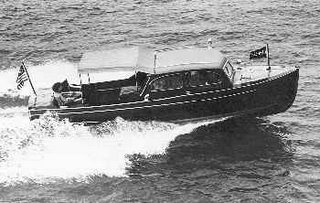
Anyway, I have been entertaining myself by imagining myself on something like this:


A beautiful mahogany boat -- vintage ChrisCraft or the ilk, with a gorgeous hunk (like in the previous pictures) with curly dark brown hair. Crisp white linen outfits, of course, the girls in sailor collars and a flag whipping in the wind in the back. Ah, well, I can dream.
Wednesday, September 27, 2006






Saturday, September 23, 2006
Yeah! It's the day after my birthday!
For my birthday I got:
a big box of books from Pitts Theology Library.
a HUGE basket of Mums from the LH (the kids are calling it a "shrub" it's so big).
Final Cut Express (software)
"Prayer" by Karl Barth, edited by Don Saliers (I'm going to get Don to sign it during class next week).
Communion in the Chapel with Don being the celebrant (OK, he didn't do this for my birthday, but anyway....)
Lunch with a good friend
dinner at the Japanese steakhouse
I didn't answer my cell phone all day.
I didn't answer email all day.
I may not do them again today.
What I did do yesterday is that I have contemplated is my ancient and advanced age. Sigh.
Ancient, am I. Of course I formed my opinion of ancient when I was 20 and 40 was ancient. I may have to reform my concept of ancient.....
a big box of books from Pitts Theology Library.
a HUGE basket of Mums from the LH (the kids are calling it a "shrub" it's so big).
Final Cut Express (software)
"Prayer" by Karl Barth, edited by Don Saliers (I'm going to get Don to sign it during class next week).
Communion in the Chapel with Don being the celebrant (OK, he didn't do this for my birthday, but anyway....)
Lunch with a good friend
dinner at the Japanese steakhouse
I didn't answer my cell phone all day.
I didn't answer email all day.
I may not do them again today.
What I did do yesterday is that I have contemplated is my ancient and advanced age. Sigh.
Ancient, am I. Of course I formed my opinion of ancient when I was 20 and 40 was ancient. I may have to reform my concept of ancient.....
Wednesday, September 20, 2006
Woo Hoo!
Pitts Theology Library is holding a book sale today!!
Woo Hoo!
I picked up a 1912 1st edition book written by Warren Candler -- that he gave to Pitts. For those who don't know, Bishop Candler was integral in moving Emory from Oxford to Decatur Georgia.
I also picked up 3 Books of Worship from 1964 that are imprinted with "Durham Chapel" -- Durham Chapel is now Pitts Library -- we dedicated Cannon Chapel in 1981. I think that when the new buildings are built, they will rededicate a "teaching chapel" and perhaps they will call it Durham Chapel.
I picked up also a 1874 copy of Milton's Poems.
Woo Hoo!
Note: I write this as I sit and listen to Don Saliers speak of the sovereingity of God. I better stop now and pay attention. Who ever put wireless in this building was EVIL.
Woo Hoo!
I picked up a 1912 1st edition book written by Warren Candler -- that he gave to Pitts. For those who don't know, Bishop Candler was integral in moving Emory from Oxford to Decatur Georgia.
I also picked up 3 Books of Worship from 1964 that are imprinted with "Durham Chapel" -- Durham Chapel is now Pitts Library -- we dedicated Cannon Chapel in 1981. I think that when the new buildings are built, they will rededicate a "teaching chapel" and perhaps they will call it Durham Chapel.
I picked up also a 1874 copy of Milton's Poems.
Woo Hoo!
Note: I write this as I sit and listen to Don Saliers speak of the sovereingity of God. I better stop now and pay attention. Who ever put wireless in this building was EVIL.
Just in case you MIGHT be interested
The paper of the day: the first two lectures in William James' Varieties of Religious Experience.
Lovely.
Lovely.
Sunday, September 17, 2006
A run-on sentence
I have a paper due at 8:00 tomorrow morning and I don't think I'm going to finish because for the first time in SEVERAL days I have a stable internet connection and I can't stop reading BLOGS and boy am I going to regret that in the morning because the silly paper comparing circumcisions and baptisms won't be finished in time because I am reading BLOGS and so I may have to turn off the brand new router so that I can finish my paper instead of reading BLOGS BUT I will develop willpower and stop reading BLOGS until the silly paper is finished.
Wish me luck.
Wish me luck.
Tuesday, September 12, 2006
Subscribe to:
Posts (Atom)